A New Chapter
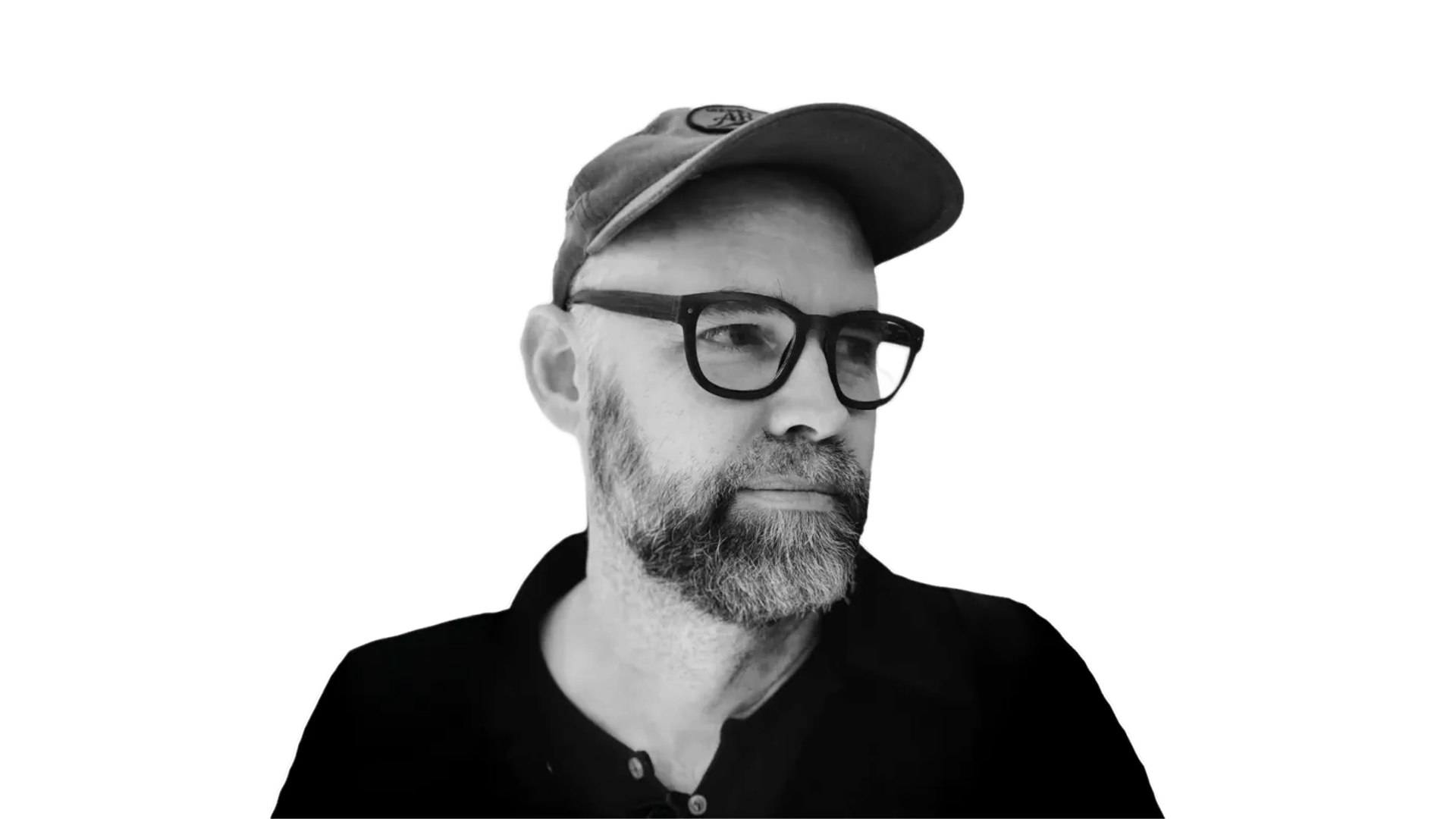
by Sebastian Hassinger
Launching New Quantum Era, LLC - a media and consulting firm, a force for making quantum technologies more accessible and equitable.

The Origin
When I started The New Quantum Era podcast with my friend Kevin Rowney in 2021, our goal was to better understand the field of quantum computing by talking directly to the researchers whose work defines and drives its progress. We both had experience with early stage emerging technologies for most of our careers, but this quantum stuff was quite novel and different in a number of ways. Not only was it directly founded on a notoriously confusing branch of physics, it was resetting the clock on information technology to a much earlier era.
Kevin had more advanced mathematics training than I, in fact we’d met when I joined a series of COVID-era zoom calls where he was leading friends through very cogent explanations of things like Shor’s algorithm, Variational Quantum Eigensolvers, and more. For my part, I had been working in the nascent quantum industry since 2017, first with IBM Quantum and, since 2021, with Amazon Web Services’ quantum technologies team, focused on building the community of quantum researchers using my employers’ technology in their work.
So I had a pipeline of guests to talk with, and Kevin had the maths foundation to make sure the interviews didn’t serve up too much hand waving but attempted to get to the core of what was being discussed.
Almost 80 episodes and 200,000 downloads later, I am very proud of what we’ve built. A while back I shifted to more in-person interviews, first at the Rensaeller Polytechnic Institute’s launch of their on-premise IBM System One, then at various conferences and workshops, the APS summit, etc. I also increased the frequency, trying to consistently post a new episode weekly, which demanded much more rapid, opportunistic interview scheduling, often with less than 24 hour turnaround. Both factors made it incompatible with Kevin’s other commitments, and so the show has been a solo endeavor for all of 2025. And now, at the beginning of 2026, the podcast is entering another new era of its own.
Starting with Monday, February 23rd's episode, I am officially offering commercial sponsorship of the podcast. These sponsorships will consist of me reading a sponsor’s copy and acknowledging their support, but will not provide any editorial control over the conversations I present. I am not going to insert any programmatic ads, so don’t worry about being hammered by pitches to buy dental floss or subscribe to monthly kitty litter shipments.
On My Own
My motivation for this shift is simple - after almost 10 years working in corporate roles as the quantum technology industry began to get its legs under it, I am now independent and working on my own projects, contributing directly to the industry in ways I think I'm best suited. Some of those projects will be in media and science communication, starting with the New Quantum Era, which has built quite a following over the past few years, so sponsors are part of my bootstrapping efforts.
Beyond the podcast, there's more in the works. The documentary shot last June at the Helgoland 2025 conference will be shifting into high gear as well - I started posting the videos of the talks to my YouTube channel last week, and I hope to get a teaser for the documentary out there for everyone to get a taste before too long. I'll be writing as well, starting with a newsletter companion to the podcast and probably another book before too long. The rest of my projects will be revealed as they are ready, but I can say they will be a mix of independent consulting services and efforts to build a more robust, accessible and equitable quantum technology community and market.
The Crucial Years 2026-2030
The moment we are in offers opportunities to find ways to help that most human quest, to understand the universe in which we exist, while simultaneously building a genuinely new computing paradigm from the ground up, hopefully with our learnings from the classical IT industry helping us make better choices this time around.
My passion for quantum information science and technology continues unabated, and if I get to work on this stuff for the rest of my career, for the rest of my life, I'll feel very privileged. So why now? Because 2026 is the year things start to get real.
Over the past year I've been saying to everyone who will listen that 2026 will see the first deployed quantum computers that have "logical qubits," in other words, qubits with some meaningful error correction protecting the physical, noisy qubits, and will therefore be able to claim some level of "fault tolerance." There will be many, many variations on just what is meant by a logical qubit, and the landscape will become in some ways even more difficult to make sense of, but the shift will have profound ramifications.
Once a system ships that has on the order of 50 fully entangled logical qubits on which a meaningfully long circuit can be executed, we will be looking at a machine that cannot be simulated on a classical system of any scale we can build.
Those 50 qubits will create a Hilbert space whose states would require 2^50 classical bits to represent it, and we simply cannot expect any classical system to provide that capacity. In practical terms, that means that anything that takes advantage of those 50 or more logical qubits and full connectivity is, by definition, demonstrating quantum advantage. Of course many of those circuits will be demonstrations with no practical application, but we have no way to predict what unexpected value may emerge from those systems, just as the pioneers of classical computing could not anticipate the impact their work would have.
And that unpredictability is the point. My favorite example of how value creation evolved in classical computing is that of Stan Ulam, a mathematician working with Von Neumann at Princeton's Institute of Advances Studies. In 1948, in an effort to calculate neutron diffusion using the limited resources of the system they had built at the IAS, he hit on a technique that involved random sampling and statistical inference, which he called the Monte Carlo technique as it most closely resembled the games of chance encountered in casinos. It worked very well for delivering useful results to physicists, but it wasn't until thirty years later that someone had the thought to apply it to financial portfolio optimization. When I see the early attempts to fit quantum simulations onto today's hardware, I see the wellspring of future quantum algorithms with broad applicability and impacts on society that are impossible to predict.
With nearly all of the first and second wave quantum computing hardware vendors promising dozens or more logical qubits by 2030, this shift is upon us — the shift that became the compelling motivation to get out here on my own, navigating these swelling currents by my own wits, working to make sense and contribute to the true beginning of a new quantum era.
Let's go.
Always, Gratitude
I want to thank my audience — it's really gratifying watching those numbers go up with every episode, it makes me feel like a lot of you are spreading the word. I want to thank my friends, partners, colleagues and mentors who have helped my understanding over the past 9 years and, most importantly, have made it fun. Special mentions go out to (in no particular order!): Pat, Abe, Nick, Kayla, Jay, David, Javad, Daniel, Emily, Olivia, Grant, Ty, Pavel, Charlie, John, Scott, Rob, Steve, and many many others. I also want to thank again my co-host and podcast founder, Kevin Rowney, and give my special thanks to my darling Ayann, producer of the podcast, the Helgoland documentary, partner in everything, best friend and my biggest fan. I'm a lucky, lucky man.
Written by
Sebastian Hassinger