E57 / July 25, 2025 / 31:21
Neutral Atom Qubits
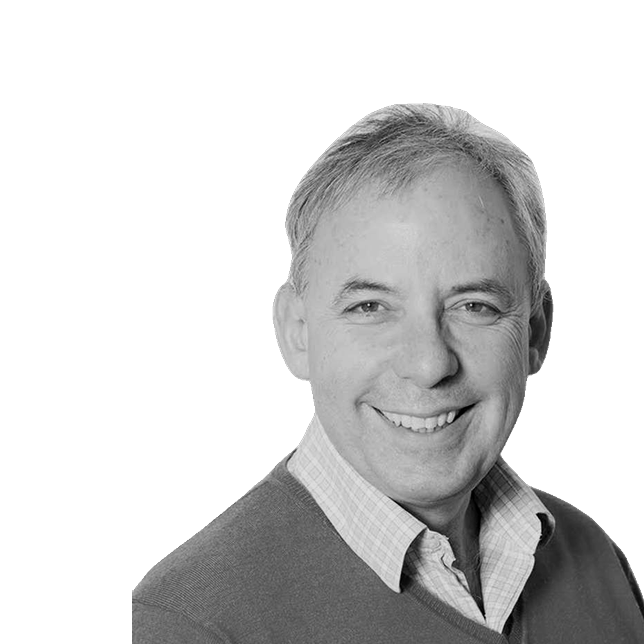
with Mark Saffman
- Evolution of Neutral Atom Quantum Computing
The history and development of Rydberg atom arrays, key technological breakthroughs, and the trajectory from early experiments to today’s platforms capable of large-scale qubit arrays. - Gate Fidelity and Scalability
Advances in gate fidelity, challenges in reducing laser noise, and the inherent scalability advantages of the neutral atom platform. - Error Correction and Logical Qubits
Discussion of error detection/correction, logical qubit implementation, code distances, and the engineering required for repeated error correction in neutral atom systems. - Synergy Between Academia and Industry
The interplay between curiosity-driven university research and focused engineering efforts at Infleqtion, including the collaborative benefits of cross-pollination. - Hybrid Quantum Systems and Future Directions
Potential for integrating different modalities, including hybrid systems, quantum communication, and quantum sensors, as well as modularity in scaling quantum processors.
- Neutral atom arrays have achieved remarkable scalability, with demonstrations of arrays containing thousands of atomic qubits—well-positioned for large-scale quantum computing compared to other modalities.
- Advancements in laser technology and gate protocols have been crucial for improving gate fidelities, moving from early diode lasers to more stabilized, lower noise systems.
- Engineering challenges remain, such as atom loss, measurement speed, and the need for technologies enabling fast, high-degree-of-freedom optical reconfiguration.
- Logical qubit implementation is advancing, but practical, repeated rounds of error correction and syndrome measurement are required for fault-tolerant computing.
- Collaboration between university and industry labs accelerates both foundational understanding and the translation of discoveries into real-world devices.
Notable Quotes
- “One of the exciting things about the Neutral Atom platform is that this is perhaps the most scalable platform that exists.”
- “Atoms make fantastic qubits — they’re nature’s qubits, all identical, excellent coherence… but they do have some sort of annoying features. They don’t stick around forever. We have atom loss.”
- “Our wiring is not electronic printed circuits, it’s laser beams propagating in space… That’s great because it’s reconfigurable in real time.”
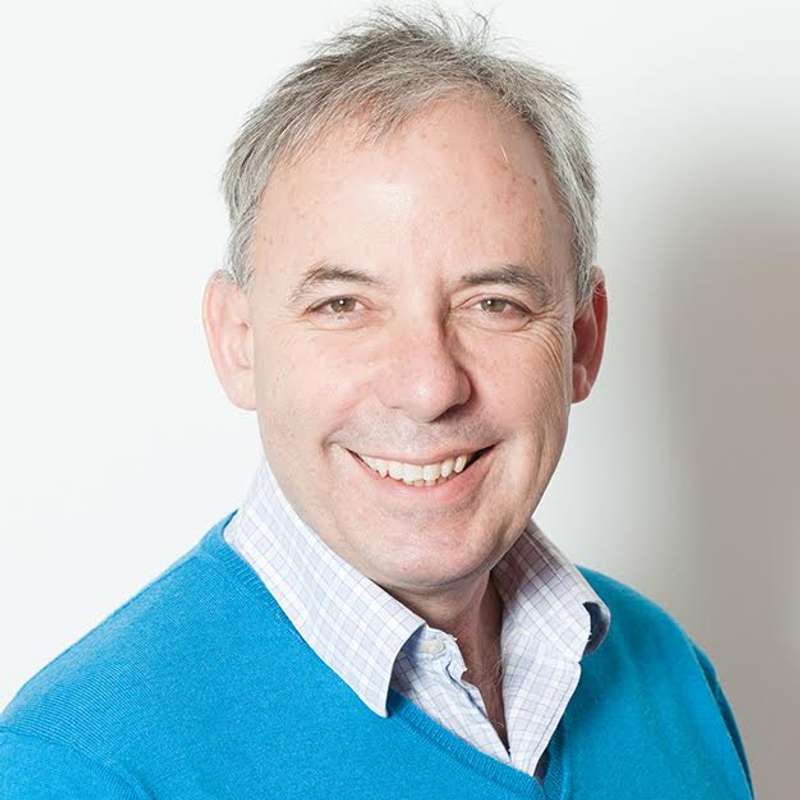
Mark Saffman is a Professor of Physics at the University of Wisconsin–Madison and the Chief Scientist at Infleqtion, a company leading the commercial development of quantum technology platforms using neutral atoms. Mark is recognized for his pioneering work on Rydberg atom arrays, quantum logic gates, and advancing scalable quantum processors. His interdisciplinary experience bridges fundamental science and quantum tech commercialization.
Sebastian Hassinger
Hello, and welcome to the New Quantum Era, the podcast where we explore the minds and technologies shaping the future of quantum computing. I'm your host, Sebastian Hassinger. Today, we're gonna be delving into one of the exciting and rapidly progressing modalities of quantum computing, neutral atom arrays. These like trapped ion devices use individual atoms as cubits, which confers certain advantages over sort of fabricated cubits like superconducting cubits. And over the past decade, neutral atoms and they'll often be called Rydberg atom arrays have moved from an experimental technology built to experiment with new forms of matter, like Bose Einstein condensates, into one of the leading modalities of qubits with incredible demonstrations of even up to like thousand qubit arrays and logical qubit architectures. So to help us understand this technology, I have the pleasure of speaking with Professor Mark Safman. Mark is a pioneer in the field of atomic physics and quantum information. He's a professor at the University of Wisconsin Madison and also serves as Chief Scientist at Inflection, one of the early commercial ventures in neutral atom quantum technology. Over the years, Mark's work has been instrumental in both the theoretical underpinnings and the experimental realization of neutral atom quantum gates, scalable platforms and advances in quantum error correction. In our conversation, we'll trace Mark's unique career path from industry to academia, discuss how early ideas about cold atom physics turned into powerful neutral atom platforms deployed today and examine the challenges and breakthroughs that are enabling even larger and more robust quantum processors. We'll also get his perspective on the cross pollination between university research and commercial product development and look ahead to the biggest technological hurdles and opportunities on the horizon. So let's jump into my conversation with Professor Mark Safman. Thanks for joining us, Mark. Thank you. Good to be here, Sebastian. So, you have been I've been really looking forward to this conversation because you've been sort of instrumental in the development of the the Rydberg Atom Array or the Neutral Atom Array as a modality. Were you involved sort of in the sort of pre quantum computing applications of those platforms in Bose Einstein condensate sort of applications?
Mark Saffman
I was not. And for a professional university professor doing atomic physics, I've had a somewhat atypical career path in that I did my undergraduate work, and then I went to industry for ten years, and then got bored with that, and then I got my PhD, and then went to a national lab, and then started as a professor at University of Wisconsin Madison in the late 90s. So I spent a lot of time in industry, which was very valuable. Yeah. And never did a postdoc, and then got to the university, but I had not published any I thought about atomic physics and doing interesting things with atoms and light and laser cooling of atoms, but I had not published a paper using atoms or cold atoms before I got to the university. And that what year was that? So I got to Madison in 1999. I started Okay. Yeah.
Sebastian Hassinger
Okay. So the the paper that I remember, you've sort of got the highest citations on is the quantum information with Rydberg Adams, right? That was 2010?
Mark Saffman
Yeah, that was a review paper with Thad Walker and Klaus Mullmer. But so just to tell you, so 1999 I was a new faculty, even though was a little bit older perhaps than most new faculty, and I had some ideas that got me the job, and I had a startup and I got a little bit of funding, but my ideas were sort of something that no one else was working on. I thought it was cool, but I couldn't get traction from the funding agencies to really build up my group. And actually, those ideas later have been demonstrated by other people, but anyway, that's a different story. But then I read this paper about the Ripberg Gate from Peter Zoller and Sarac and Lucan and a few other people. I was like, Oh, wow, it looks interesting. Why don't I try and do that? Just brash on faculty. And ten years later, we had the first CNOT gate. So that was just a lot of fun. And when we started, there was no thought in my mind of, oh, we're going to build a quantum computer. Right. It was, this is an interesting physics experiment. Right. It's challenging. It's got potential impact. No one else is doing it. Let's try and do that.
Sebastian Hassinger
Excellent. And so even to the point of coming up with the implementation of a CNOT gate, you were still not really thinking about quantum computing?
Mark Saffman
Well, I mean, this was 1999. If you look back at True. Quantum computing, there's sort of these five major modalities today. There's a few other approaches, but there's the five primary ones. And the ideas for how you do gates and entanglement and build up circuits, those modalities all appeared basically in the late nineties Yeah. And maybe Yeah. I think by the year 2000 Right. The ideas were all there, including neutral atoms. There are a few different ideas in '98, '99 for neutral atoms. Then this Rippergate paper really this this looked very powerful. Mhmm. And I had not worked with Ripperg atoms. I knew what Ripperg atoms were. And but, I mean, it just wasn't yes. I knew it was for quantum computing, but it wasn't like, oh, I really wanna build a quantum computer and do circuits.
Sebastian Hassinger
I understand. I mean, in the late nineties, I was it seems still pretty
Mark Saffman
far off. Yeah. Still is. So Well, it still is, but it's also a very different world.
Sebastian Hassinger
Yes. Yeah. Yeah. Mean, more recently, obviously, you mentioned Lucan. Lucan and Volatich's result of sort of the 48 logical qubits. That's kind of astounding. Yeah.
Mark Saffman
It's it's fantastic, beautiful work. And so this Neufil Atom platform, you know, we started in writing proposals and getting funding in 'one, 'two. It was a very small activity for quite a few years. We were doing it, the group in Paris, Grande Emperoes, Dave Weiss, Bill Phillips and Trey Porto. It was really quite a small activity, and we had a gate in 2010, the French did also, had entanglement, and fidelities were not great and so on. It sort of was still a small area, And, really, there was a big sea change in, 2016 where three different groups Right. The Korean group, J. Wakan, Lucan group, along with Duluthich and Greiner, and Broeys in Paris all independently introduced this atom rearrangement ideas. Right. And it was most effectively done in the work at Harvard and in Paris, and that really changed the situation. That was that was one thing, which sort of enabled us to not have these sparsely populated arrays of single atoms, but have a fully occupied array, which was a useful platform for then doing quantum circuits and so on. Another thing was there was a big jump in the fidelity of the entangling operations. And I'd say interestingly, what contributed to that in my mind, there's really two aspects. One, people develop better protocols. Our demonstration in 2010 was the original year 2000 paper, a certain laser pulse sequence which works, but it's not ideal, and people came up with better ideas for how to optimize the protocols to make them less sensitive to technical errors. Plus, there was a understanding emerged of the importance of reducing laser noise that we haven't fully appreciated earlier. And so the combination of that and making the lasers better plus these new gate protocols combined to give us
Sebastian Hassinger
I see.
Mark Saffman
Much higher fidelities and now a number of groups with different atoms have very high gate fidelity Right. Two and a half nines getting close to three nines. Right.
Sebastian Hassinger
Right. And the laser noise, is that a matter of working with vendors on the the actual construction or or design of the lasers? Or is that using the laser on the table and and having, you know, mechanisms to reduce noise after the production of the light, essentially.
Mark Saffman
Yeah. It's a combination of things. We work with vendors, but really making these very quiet lasers is mainly done by the academic or now the commercial groups by doing better stabilization of the lasers. But it was also moving from diode lasers, which are very convenient, relatively inexpensive, to more expensive laser types that intrinsically are lower noise.
Sebastian Hassinger
I see. I see. Interesting. It's and and do you think I mean, so the neutral item platforms were still are used for boson and condensates. Do you think that that work is sort of independent entirely of the computation, or did it help with the the working knowledge of the platform and how to how to, you know, do things like address the noise or that sort of thing?
Mark Saffman
Science and technology evolve, and the advances one year are then used the next year and so on. And so, you know, for example, if you look at trapped ion quantum computing, and trapped ions were the first modality that demonstrated a quantum gate. Sir Axallar showed how to entangle and do a gate with trapped ions, and one year later, the Weinland group demonstrated it. Yeah. How could they go so fast? Because they'd been working on trapped ion control for twenty years. Right. So they were positioned. So the work we're doing with atom arrays and Rydberg atoms and qubits builds on our understanding and techniques that include Bose Einstein condensates, but we don't directly use Bose condensates in Right, this
Sebastian Hassinger
right. Yeah. So it's working knowledge or institutional knowledge as a whole.
Mark Saffman
There's a toolbox of techniques and there's also a toolbox of technology and equipment that's also developed tremendously. I mean, our latest experiments with prototype neutral quantum computers have up to 15 different laser systems.
Sebastian Hassinger
And,
Mark Saffman
you know, I think thirty years ago, you just couldn't imagine operating those experiments. Right. It just wouldn't be reliable. But we do it now Yeah. More or less routinely, although lasers are still one of the headaches. Yeah.
Sebastian Hassinger
You mentioned trapped ions. Were techniques or learnings from trapped ions that were leveraged by the neutral atom platform?
Mark Saffman
Yeah, there's a lot of overlap. Yeah. So some of the cooling techniques can be transferred to neutral atoms and having Raman sideband cooling, for example, measurement techniques, the actual gates work in a different way and the details of how we trap individual atoms or ions are different. But there there there's a lot of overlap, and I'd say atoms and ions are closer to each other, of course Of than the other five volts.
Sebastian Hassinger
Yeah. Absolutely. And do you I mean, each modality has sort of intrinsic limitations of scale. Do you think that it'll be literally the numbers of lasers that you can manage that'll limit neutral atoms?
Mark Saffman
No, I don't. So scalability is very important because we are in an era where it's no longer a question, well, is this stuff real? Can you make qubits work? Can you perform gates? Absolutely. This is all working as we expected based on our physics understanding. But how do you scale up both the number of qubits, the size of the systems, but also the quality of the operation so you get meaningful computational results out. And one of the exciting things about the Neutral Atom platform is that this is perhaps the most scalable platform that exists. And, you know, with relatively compared to other approaches, relatively little investment and relatively still relatively small community working on it, has been just incredible progress in in the last five years. So there's now multiple groups that have demonstrated arrays with thousands of of atomic Yeah. Qubits. And There's a lot
Sebastian Hassinger
of space in that vacuum. There's a
Mark Saffman
lot of space in that vacuum. Know, we can put Atoms
Sebastian Hassinger
are really small.
Mark Saffman
Well, we can put a 100,000 atomic qubits in an area the size of one transmog. Yeah. So that's the kind of ratio. Yeah. And there's no reason, in principle, why you couldn't put millions of atoms in one small vacuum cell that could fit in the palm of your hand. Yeah. You need more laser power. There's ways of reducing the power requirements, reusing light, but there's also some technology requirements that are still waiting to be developed, I would say. And so one of the ones I would highlight is that this atomic approach to to qubits and quantum computing relies on optics for control. Our wiring is not electronic printed circuits. It's laser beams propagating in And that's great because it's reconfigurable in real time. Right. It gives a great deal of flexibility that's very powerful. But it also means we rely on technology that can rapidly reconfigure optical patterns in space. And there's technology today that's very fast, but can't give you enough spatial degrees of freedom. And there's technology that's slow but has many spatial degrees of freedom. We want many spatial degrees of freedom and very fast. Doesn't really exist. People are working on different But approaches to we don't have that technology
Sebastian Hassinger
But it feels like a solvable problem. I believe it is a solvable problem. Yeah. And would that mean faster gate operations like sort of across the system? Yeah. So interestingly,
Mark Saffman
our gates are already very fast. So the latest high fidelity entangling gates are couple 100 nanoseconds. So they're fast. Yeah. Our slow point is the measurement time. I see. Right. And so there's also efforts underway to make the measurements much faster. Right now the measurements are couple orders of magnitude Right. Or more slower than the gains.
Sebastian Hassinger
Right. Right. And also preparing, I think, like, configuring the the array and and sort of preparing the starting state is relatively slow.
Mark Saffman
It's relatively slow. I mean, any machine has a boot up time. When you turn on your PC, it takes a little
Sebastian Hassinger
while to get progress bar, the neutral atom, right?
Mark Saffman
Well, we could get there. Sure. Sure. There's that, there's measurement, there's also you know, atoms make fantastic cubits. These are nature's cubits, they're all identical, they have excellent coherence, they're very well described in our theories, we understand them in great detail, And then they do have some sort of annoying features or defects, which is they don't stick around forever. We have atom loss. Right. That's not a showstopper, but it's gonna require some extra engineering to deal with that. And people are starting to demonstrate this real time replacement Compound loss. Continuous operation of arrays and so on. So it's sort of most more engineering in a sense, but it has to be done and it's challenging, but it will be done.
Sebastian Hassinger
That's really interesting. Yeah, mean, as you said, the demonstrations, I think the I can't remember the name of the but it was I think it was Caltech had something like 6,000?
Mark Saffman
That's right. Yeah. The Endres Group at Caltech has more than 6,000. Which is incredible. There's 2,000 Adam Hare from China in inflection. We showed a 1,600. Right. Just heard some talks from Harvard this week, and they have more than 3,000 continuously reloaded. So there's lots of I
Sebastian Hassinger
mean, that one demonstration of logical qubits that was published was 280, I think, atoms Right. For 48 logical qubits. So you can you can It's a pretty good ratio to start with. If you crank up the number of of atoms in the the array, you're talking about a large number of logical qubits.
Mark Saffman
That's right. And maybe I'll just make a a pitch here for to be a little more specific when they talk about logical qubits. Because your logical qubit may not be the same as mine. Yeah. And you really need to describe logical qubits by what their logical error rate is and how deep a circuit
Sebastian Hassinger
Yeah.
Mark Saffman
You can actually use them in. And so these small logical qubits, each of which is based on just a handful of physical qubits, don't have the kind of performance that we're ultimately going to need for running d.
Sebastian Hassinger
Is sort of summed up in d, in the value of d in your mind or is it more than that? It's more than that.
Mark Saffman
So there's n k d,
Sebastian Hassinger
if you're
Mark Saffman
So familiar with one describes a logical qubit with three numbers, n the number of physical qubits Right. K the number of logical qubits that are being encoded, and d, the code distance Right. Which you can think of as a number of errors that can be tolerated Right. And corrected. Right. And so one cares about d that we can correct more errors and therefore have a lower logical error rate. But one also cares about the ratio of n over k Yeah. Or the maybe it's k over n Yeah. The code rate, you know, how many how what's the overhead of physical cubits to encode a number of logical cubits. Yeah.
Sebastian Hassinger
Yeah. Yeah. Well, as I said, I mean, that 48 to two eighty, I think, is is a is sort of an industry leading k over n.
Mark Saffman
That's right. But they were mainly error detecting, not correcting qubits. They also did some error correcting. That's true.
Sebastian Hassinger
That's the other element of being precise about what you mean when you say logical qubits. It's like syndrome detection and then syndrome correction is pretty important too. So,
Mark Saffman
you know, I would say, know, sort of parallel this very nice work from Google where they actually showed they could increase the code distance and had I forget what distance they got to.
Sebastian Hassinger
I think they did d seven. Think so. Yeah. I think so. You know, it's also very
Mark Saffman
Yeah. Impressive.
Sebastian Hassinger
Yeah. And I mean, yeah, that was I think the sort of underappreciated, at least in a more general audience aspect of the Google announcement in December was was that it as they increased the the d, they they got longer effective computational time. Right. It really worked.
Mark Saffman
Yeah. Like So as advertised. You know, these things are highly technical. There's a lot of details which can get lost to an outsider. Of course. The the bottom line is there is tremendous progress Yeah. Across Yeah. A number of platforms.
Sebastian Hassinger
Yeah. At inflection, you mentioned you've got sort of, you still have an involvement with inflection as well as the academic affiliation. And you mentioned the 1,600, number for inflection. Is there a similar sort of effort to implement? I I guess it's an LDPC is the the sort of the the family of codes that that has been implemented in in neutral atoms, quantum LD PCIs?
Mark Saffman
Not really. My university group has done theory work on that. There's many other theory papers. We do have a preprint out from inflection on logical qubits. It was just two logical qubits, but we're actually happy to say that we did some things with those logical qubits that have not been done by One, we demonstrated something known as Gottesman benchmarking that really across a random range of circuit operations showed that the logical qubits outperformed the physical encoding. And we also ran a prototypical material science simulation problem at the logical level and showed that it outperformed the same circuit done at the physical level by a good margin. This Cool. These were error detecting logical qubits, so this is post selected. Okay. And that's that's valuable if your problem's not not too large. Right. Right. Right. Right.
Sebastian Hassinger
Yeah. Yeah. Okay. So as opposed to a sort of mid circuit measurement and feed forward, you're doing Right. You're post selecting and saying, okay, there was an error in that run, so we're throwing out that.
Mark Saffman
Post selecting. And then, of course, we're also working on mid circuit measurements and what will be error correction and feed forward. And our approach to that is based on a two species neutral atom quantum computer where we combine two different elements and use one for data qubits, one for measurement qubits. And what's great about that is because these different elements respond to different wavelengths of light. Right. So we do need more lasers. Yes. But they respond to different wavelengths so we can operate on one without crosstalk to the other. Right. This is very, I think will be very significant Yeah. Increasing the speed of the logical computation.
Sebastian Hassinger
That's really interesting. Have have you created those sort of multi species traps and We do. Or arrays in in the lab in in the university lab?
Mark Saffman
So we have done it at inflection. Yeah. And also have a parallel effort at the university. And also there's a preprint out from December on that work, actually which was a university collaboration. And we have some very recent unpublished results with higher fidelity two species gates.
Sebastian Hassinger
Excellent. That's really interesting. The sort of the one foot in both worlds, the industry and academic. That's, I think, it's a very powerful sort of position, or or stance to be in, at this stage of the technology because it is so tied to fundamental understanding of of quantum phenomena. Do you I mean, do you feel like your university group is more, curiosity driven, sort of wider dispersion dispersion of sort of experimental designs the outcomes you're looking for. And then in inflection, there's sort of a tighter focus towards, you know, engineering kind of solutions.
Mark Saffman
That's one way to put it. I'd say that the boundary or the separation between what we're doing at the university and the company is pretty fuzzy these days. You know, we have some shared overall goals. We wanna see the science and the technology advance and and quantum computing become a a real useful thing. Company wants to provide shareholder value. The university we're educating people and and publishing is more the goal. And there are certain engineering parts of the work that are best done at the company. And at the university, we can be more exploratory, more flexible, and sort of less planned in advance. But there's creativity happening both places and over the last year since I got involved, we've built up a super capable group at the company and good ideas go back and forth in both directions. And I'll say that's maybe the thing I'm most proud of is having established a collaboration between those two entities where it really is a collaboration.
Sebastian Hassinger
That's great. Yeah. I mean, if if if properly harnessed that kind of sharing of ideas and and cross pollination, it'd be extremely powerful, I think.
Mark Saffman
That's right.
Sebastian Hassinger
That's terrific. And and actually, in along the same lines, do you think that, you know, each modality, again, sort of has its own strengths and weaknesses, its own gating factors? Do you think that there will be sort of ways in which other modalities can be paired with neutral atoms for in larger system design, let's say?
Mark Saffman
Yeah. So that sort of falls under the rubric of hybrid quantum systems, if you will. And, you know, on the university side, I'm I'm part of one of the NSF Quantum Centers Right. Which is specifically targeting hybrid quantum architecture Each network. To HCAM. That's right. I'm the co PI on HCAM for for medicine. And, you know, homogeneous quantum systems are challenging. Hybrid quantum systems are maybe even more challenging as possible, but also potentially tackle that too. Really important. Yeah. And so we're we're working on that. And, you know, in a sense, I would say atoms are unique in that they can address the challenges of all the verticals one mentions when talking about quantum technologies, which is computing, communication, and sensing.
Sebastian Hassinger
Right.
Mark Saffman
We'll talk about these three areas. Right. And I think atoms and ions are sort of the one modality that really has something to say about all of those.
Sebastian Hassinger
Yeah. That's interesting. That's interesting.
Mark Saffman
And we're interested in all of those at inflection, which is not a pure play quantum computing company. We also have an atomic clock product, and we're working on atom based sensors using the same Rydberg states that we use for the quantum computer. So there's a huge synergy there and and shared knowledge base.
Sebastian Hassinger
That's really cool. And, I mean, I imagine, you know, sensing, processing the signal out of quantum sensing is, seems like a natural task for quantum computation. And if you're doing both of those things in RIDBAR arrays, you maybe even can do it in one device potentially.
Mark Saffman
Well, that's right. And that has been quantum enhanced learning from based on quantum data that's coming from a quantum sensor has been identified as one of the areas where we might potentially first see real useful quantum advantage. Yeah. And that's something that's top of mind for us at inflection.
Sebastian Hassinger
Is the fact that you're using lasers for cooling and gate operations, does that give you some advantage in optical links between arrays?
Mark Saffman
Well, yes, from the perspective that intermediate and long distance quantum links are gonna be with photons as the information carrier, and we naturally use photons Exactly. To control our atoms. So so making those links is very natural for us. Yeah. And and we're also working on on those things.
Sebastian Hassinger
Yeah. Yeah. I imagine. I mean, at least in my my intuition is that since you're already lasers are intrinsic part of your system operation, then then optical links should be easier between between a radio. And although, I guess, as you said, there's there's the upper limit of of what you can put in one vacuum is still really high. So maybe you don't need to worry about optical links yet.
Mark Saffman
It is very high, but nonetheless, people are very much thinking about how to modularize
Sebastian Hassinger
Right.
Mark Saffman
And build larger systems. And it is certainly true that to make optical links between atoms and ions, or atoms with atoms and with ions or vice versa, is much more straightforward than say connecting superconducting processes Yes. Of long distance with with optics. Yeah. People are working on that, but that's very challenging.
Sebastian Hassinger
Yeah. Yeah. So if you if you look ahead over the next year or so, I know nobody likes to do this. But I guess what is the what's the area that you are the most excited about in terms of of areas of progress in neutral atoms today? Well, I think there's going to
Mark Saffman
be continued progress on the gate fidelity. Yeah. It's already very good and competitive, but I think it needs to be even better to really scale up these systems to reduce the overheads of error correction. Right. And, you know, I'd say one thing that hasn't really been demonstrated yet and needs to be done for neutral atom platform is the ability to do repeated rounds of error correction. Right. Because, you know, one of these annoying features of neutral atoms is that when we measure them, they can also heat up emotionally.
Sebastian Hassinger
I see.
Mark Saffman
And so we need to either not be able to measure them without heating them or be able to reduce that, recool them without affecting the rest of the array
Sebastian Hassinger
and so And
Mark Saffman
so that really hasn't been done. We haven't done 10 rounds of error correction on
Sebastian Hassinger
your drawing. Interesting. That's one of the challenges that people are It's almost an equivalent of like a reset gate in a sense.
Mark Saffman
Well, you need to you make a measurement that's projected measurement. You you wanna reset the spin state. Right. And we can do that, no problem. But with ADAMS, we also have to take care of resetting the emotional state
Sebastian Hassinger
I see. I see.
Mark Saffman
At some point.
Sebastian Hassinger
Fascinating. That's amazing. Thank you very much, Mark. This has been very, very informative and enjoyable.
Mark Saffman
Thank you. Good to talk to you. Thanks.
Sebastian Hassinger
Thank you for listening to another episode of the podcast, a production of the new quantum era hosted by me, Sebastian Hassinger, with theme music by OCH.
Mark Saffman
You can
Sebastian Hassinger
find past episodes on www.newquantumera.com or on blue sky at newquantumera.com. If you enjoy the podcast, please subscribe and tell your quantum curious friends to give it a listen.
creators and guest

stay curious