E65 / September 19, 2025 / 33:13
Quantum sensitivity breakthrough
with Eli Levenson-Falk
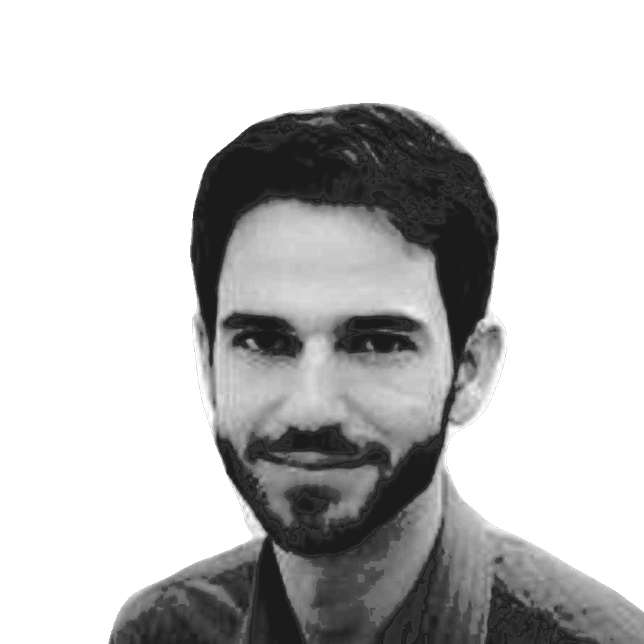
Guest Bio
Eli Levenson-Falk is an Associate Professor at USC. He earned his PhD at UC Berkeley with Professor Irfan Siddiqui, and now leads an experimental physics research group working with superconducting devices for quantum information science.
Key Topics
- The new protocol described in the paper: “Beating the Ramsey Limit on Sensing with Deterministic Qubit Control."
- Beyond the Ramsey measurement: How the team’s technique stabilizes part of the quantum state for enhanced sensitivity—especially for energy level splittings—using continuous, slowly varying microwave control, applicable beyond just superconducting platforms.
- From playground swings to qubits: Eli explains how the physics of a playground swing inspired his passion for the field and lead to his understanding of the transmon qubit, and why analogies matter for intuition.
- Quantum decoherence and stabilization: How the method controls the “vector” of a quantum state on the Bloch sphere, dumping decoherence into directions that can be tracked or stabilized, markedly increasing measurement fidelity.
- Calibration and practical speedup: The protocol achieves greater measurement accuracy in less time or greater accuracy for a given time investment. This has implications for both calibration routines in quantum computers and for direct quantum measurements of fields (e.g., magnetic) or material properties.
- Applicability: While demonstrated on superconducting transmons, the protocol’s generality means it may bring improved sensitivity to a variety of platforms—though the greatest benefits will be seen where relaxation processes dominate decoherence over dephasing.
- Collaboration and credit: The protocol was the product of a collaborative effort with theorist Daniel Lidar and his group, also at USC. In Eli's group, Malida Hecht conducted the experiment.
By breaking through the Ramsey sensitivity limit, this work provides a new tool for both quantum device calibration and quantum sensing. It allows for more accurate and faster frequency calibration within quantum processors, as well as finer detection of small environmental changes—a dual-use development crucial for both scalable quantum computing and sensitive quantum detection technologies.
Episode Highlights
- Explanation of the “Ramsey limit” in quantum measurement and why surpassing it is significant.
- Visualization of quantum states using the Bloch sphere, and the importance of stabilizing the equatorial (phase) components for sensitivity.
- Experimental journey from “plumber” lab work to analytic insights, showing the back-and-forth of theory confronting experiment.
- Immediate and future impacts, from more efficient calibration in quantum computers to potentially new standards for quantum sensing.
- Discussion of related and ongoing work, such as improvements to deterministic benchmarking for gate calibration, and the broader applicability to various quantum platforms.
Sebastian Hassinger
Welcome to the New Quantum Era podcast. In this episode, I'll be joined by doctor Eli Levenson Falk, associate professor of physics, astronomy, and electrical and computer engineering at the University of Southern California. Eli got his PhD at UC Berkeley while working with Professor Irfan Siddiqui and now leads an experimental research group at USC working primarily with superconducting devices and their applications in quantum information science. Our conversation today is going to be primarily about the work that Eli's group did recently that was published as a paper titled Beating the Ramsey Limit on Sensing with Deterministic Qubit Control, which appeared in Nature Communications in April 2025. The paper describes a novel protocol for making measurements on quantum devices that are more sensitive than the Ramsey measurement limit. And you'll hear how the coherent stabilized technique may be used for more robust computation on superconducting devices with potential sensing applications on superconducting devices and other types of quantum devices as well. We'll dig into Eli's journey from playground physics to cutting edge quantum experiments, unpack the fundamental challenges of decoherence, and discuss the implications for both quantum computing and sensing. Eli will be sharing the story behind his experimental work and talking about the collaboration with a theorist Daniel Lidar, who we've had previously on the podcast, and how subtle improvements in control can lead to significant advances in calibration, measurement speed, and sensitivity. I'm personally always really fascinated by the nuts and bolts of quantum hardware design and experimentation, and I found my conversation with Eli really compelling. Let's get started with doctor Eli Levenson Volk. So I I wanted to ask you first just to briefly introduce yourself before we get into the conversation.
Eli Levenson-Falk
Yeah. I'm Eli Levenson Falk. I'm an associate professor of physics and astronomy and of electrical and computer engineering at the University of Southern California. And I run an experimental research group using superconducting circuits for quantum information science.
Sebastian Hassinger
That's awesome. That's such an interesting, mix of of different specialty areas. How did you sort of arrive at that combination of astronomy and and electrical engineering and?
Eli Levenson-Falk
Well, so the the department is is the department of physics and astronomy. Okay. So if you're if you're one, you're automatically the and Interesting. My my own astronomy knowledge is not great Gotcha. Which is really too bad because all anyone wants to hear about is space, but we're trying to convince them to be excited about quantum too.
Sebastian Hassinger
Yeah. Yeah. Well, you know, space works on quantum. So so I I wanted to talk to you because you did some recent work that was published in Nature that I thought was super interesting developing a new protocol for quantum sensing that improves the performance of superconducting devices in that sensing kind of of application. Is that right?
Eli Levenson-Falk
Yeah. I mean, it's it's really more of a protocol, and so it will apply to other types of devices too. It's not just superconducting.
Sebastian Hassinger
Oh, interesting.
Eli Levenson-Falk
I mean, we demonstrated it on a superconducting device because that's what I work with. Right. But it's really the way that we did the control that is the important thing, and that's I see. That's a very general thing that would apply to a lot of technologies.
Sebastian Hassinger
Interesting. So, I mean, it's not specific to sort of microwave pulse interactions with a superconducting device?
Eli Levenson-Falk
No. It it really will work on any technology where you can do what we'll call a continuous control, where you can just sort of be slowly, you know, pushing it towards something continuously over time where you don't have to just only do pulses.
Sebastian Hassinger
I see.
Eli Levenson-Falk
And that that's most technologies. There are a few where you can really only do things in in sort of discrete pulses. But Right. For most of them, you can do something continuous.
Sebastian Hassinger
Interesting. So in this case, there there is I mean, microwave pulses are sort of the the main way that you interact with calibrate, do gate operations with a superconducting qubit. What would be the the way that you would apply continuous control?
Eli Levenson-Falk
So it's just very, very long, very, very slow microwave pulses, basically. And we're just sort of varying the strength as it goes. So you can think of it as just like a continuous microwave drive.
Sebastian Hassinger
Right. Okay.
Eli Levenson-Falk
And, I mean, one way to to look at it is the whole point of what we're doing is to learn the difference in energy of two quantum states. That's the thing we're really trying to sense. In order to get a system to switch between those states, you drive it at a frequency that corresponds to that energy difference.
Sebastian Hassinger
Right.
Eli Levenson-Falk
The fast the the stronger your drive is, the faster it will transition. Transition. Mhmm. And so if you can vary the drive strength, then you can sort of do this continuous control, and that's what we do.
Sebastian Hassinger
I see. Interesting. So so then I remember I mean, there's a couple of of incidents. So you can think of the microwave pulses as being, like, you know, the almost the the the content on the carrier signal. So this sounds more like almost like the the carrier signal itself. Is that?
Eli Levenson-Falk
I I would say it's the it's the amplitude of the carrier signal. Okay. Yeah. So there's there's a carrier signal which say which is what controls the fact that you're actually driving this transition at all.
Sebastian Hassinger
Okay.
Eli Levenson-Falk
And then there's the amplitude of it, which sort of controls how fast you're doing.
Sebastian Hassinger
How fast. Okay. That makes sense. That makes sense. And so what was the the sort of the the secret sauce that that that led to this this new protocol? What's it what does it distill to?
Eli Levenson-Falk
Yeah. So it actually started as just trying to demonstrate a toy model that we we didn't really think was going to have anything to do with sensing. So the idea is that when you have a quantum system, you can put it in a superposition of more than one state. Typically, we'll deal with the simplest possible thing, which means there's only two states, and you put it in a superposition of those two states. And what happens is because of interactions with the environment that we don't control and that are kind of noisy and random, this state gets scrambled. And so then if you do the experiment again, you get a different result. Right. And not in the sort of like quantum probability way, but in the sort of just like noise scrambled things and mess things up. Right. And we call that decoherence. Basically, the the degrading of repeatability, let me say Mhmm. Of the experiments. It turns out that you can protect sort of part of the quantum state from decoherence, at least for some period of time, by taking whatever decoherence has happened to the whole state and kind of dumping it all into the other parts of the state. So the easiest way to think about this is actually kind of in a in a picture of a vector pointing somewhere on a sphere. So this is known as the Bloch sphere picture.
Sebastian Hassinger
The Bloch sphere.
Eli Levenson-Falk
Yes. Used a lot for qubits. If you have something where, let's say, the vector is pointing somewhere at the, like, the equator of the sphere.
Sebastian Hassinger
Right.
Eli Levenson-Falk
And then you get random rotations about the vertical axis because of noise. Then and you average a bunch of these together. What it looks like is that the vector just sort of, like, decays towards the center of the sphere. It just gets shorter and shorter and shorter.
Sebastian Hassinger
I see.
Eli Levenson-Falk
If it wasn't on the equator, if it was, like, tilted up from the equator, it would sort of decay towards the vertical axis, and you'd end up with just a shorter vertical vector.
Sebastian Hassinger
I see.
Eli Levenson-Falk
What we can do basically is say, well, we know it's doing that. Let me rotate it down towards the equator at the exact same rate that it's shrinking back towards the vertical axis. And what this does is instead of shrinking to the vertical axis, makes it shrink to the horizontal plane, to the equator plane. And so we're stabilizing the amount of the vector that's pointing along this equator plane. We call this a coherent stabilization protocol.
Sebastian Hassinger
Okay.
Eli Levenson-Falk
And this was worked out by our theory collaborator, Daniel Lidar, who's another USC professor.
Sebastian Hassinger
And another guest on the podcast.
Eli Levenson-Falk
Yes. He he worked this out many years ago as just an example of, I think, how the block equations work Mhmm. For his class on open quantum systems. And his student was going to generalize this to sort of a much more general principle of stabilizing properties of quantum states and wrote a theory paper on that, which is now published. And so Daniel came to me and said, hey, can you just demonstrate this? Like, we're going to do the generalization. Can we just show that it's it works experimentally? And so we said, yeah. Cool. No problem. And, you know, we it takes a little bit of work to get everything calibrated right and get all your systems set up right, but it was relatively straightforward. And we were trying to demonstrate the result. And to make things simple, to make the data look nice, we were trying to show it in a way that there was no sort of constant rotation about the z axis, about the vertical axis, that the vector really just stayed pointing in one direction direction in the in the horizontal plane. And we kept finding it was rotating. We kept finding it was it was moving around in that plane. It like, we couldn't calibrate it right. And we said that there's no way that we're we're doing this that wrong. Like, why do we keep missing? You know, we we know how to do this. And we thought, well, hey. It's, you know, it's it's behaving differently because we're doing this control. Does that make it more sensitive? And so we went and did some math, and this is this is my point of pride that I actually went and did the the paper and pencil theory on this, which is something that I'm normally terrible at. I'm I'm just this side of being a plumber. I I I I'm the one who who does the cooling water and the pneumatic stuff and, you know, I'm not the one who
Sebastian Hassinger
I had to say though, you're like, all the best experimentalists have that kind of, humility of like, I'm just an electrician or I'm just a plumber. I think that's it kind of distinguishes you as probably being a really good experimental physicist, actually. So. Yeah.
Eli Levenson-Falk
So, anyway, I mean, went went and did the theory and found that, yes, indeed, it does basically give you more sensitivity to anything that would cause the vector to rotate. And so then we were like, okay, if you're more sensitive to something, that can be bad if you're trying to calibrate, but it also can be good if you're trying to detect. Right. And so that's where this application to quantum sensing comes in. And so it's it's useful then to back up and say, okay, like, what is the problem that we're actually trying to solve here? Like, what is the thing we're trying to detect and how is it usually done?
Sebastian Hassinger
Right.
Eli Levenson-Falk
So this problem is basically trying to figure out exactly how far apart in energy two quantum states are. And what happens is if you put two states in superposition, there will be a phase difference between the states. Basically, one of them in that superposition is going to get multiplied by a complex number with magnitude one, which basically, you know, has a phase in it. Equivalently, you could just say like it's this vector and it's rotating around the vertical axis. It's the same thing. The rate that that phase grows or the rate that the vector rotates is determined by the energy splitting between the two states. Mhmm. This is known as the Larmor frequency. It is Okay. Very well studied in, for instance, nuclear magnetic resonance, which seems for MRI.
Sebastian Hassinger
Interesting.
Eli Levenson-Falk
And it it's essentially tells you, you know, how far apart in energy these two states are. Right. Now that's actually a really useful quantity to know because it turns out there's lots of things that you might want to detect that you can sort of map to that. For instance, if you want to detect a magnetic field, okay, you put two states that are sensitive to magnetic field, a system that has two states that are sensitive to magnetic field, and the energy splitting will change depending on the field.
Sebastian Hassinger
Right.
Eli Levenson-Falk
And so you measure the splitting, you measure the field. That's also used for, like, temperature. It's used for, how much, deformation you find in a crystal lattice. You know, there's there's all sorts of things you can detect this way. It's also really necessary for quantum computing to know what this transition is so you can calibrate all your operations correctly.
Sebastian Hassinger
Yeah. In reading the paper, I got that sense that that there was sort of direct sensing applications, as you said, magnetic sensing or those types of things, but also potentially benefits to to a a quantum like, if it was an embedded part of a quantum computer, it might actually improve things like calibration and and coherence times just intrinsic to the system itself. Right?
Eli Levenson-Falk
Yeah. Basically, you you you can use this to calibrate the frequency of your qubit, you know, the the difference in energy of these transitions, a little bit more accurately than you otherwise would in in shorter amount of Interesting. So basically, you don't have to spend as much time calibrating your operations, which is good because it turns out that all these things kind of drift around and you have to keep recalibrating Right. All the time. And that's Yeah. That's downtime. Yeah. And, you know, these things aren't cheap, so it'd be nice to have them up and running as much as possible.
Sebastian Hassinger
Yeah. And in that setting, in that sort of aid to calibration, would that be additional sort of components within the, you know, additional superconducting circuits within, like, non functioning qubits, or would that just be a way that you're interacting with the the qubits that do the computation?
Eli Levenson-Falk
Just the way you're interacting. It looks Interesting. Very, very similar to the standard way we calibrate them, but it includes a little bit of special sauce that makes it more sensitive.
Sebastian Hassinger
That's really cool.
Eli Levenson-Falk
So maybe it'll help to go through what the sort of typical way
Sebastian Hassinger
Sure.
Eli Levenson-Falk
Please. And this is something that was invented in 1950, and I would say has been the gold standard ever since. It's called a Ramsey measurement.
Sebastian Hassinger
Right. Yeah. The the paper makes mention to, you beating the Ramsey Yeah. Yeah. Threshold.
Eli Levenson-Falk
Claim to fame. Yeah. So in a Ramsey measurement, what you do is you take, you know, a quantum system with two states. You take a qubit and you put it in a superposition, where it's sort of equal amounts of both states. So again, in this vector picture, it's like the vector is pointing somewhere in the equator. Then you let it just evolve freely and it will rotate around the vertical axis. It will pick up this phase at a rate that's determined by this energy splitting. So you just let it go for some period of time and then you do a rotation so that it goes back to the vertical axis or tries to go back to the vertical axis. And you measure it and your measurement basically tells you on average where on the vertical axis it ends up. Right. And this basically just tells you sort of where in the horizontal plane it was. Okay. So, you know And that
Sebastian Hassinger
drift then gives you an indication of what the energy difference is between the two states.
Eli Levenson-Falk
Exactly. Basically
Sebastian Hassinger
Right.
Eli Levenson-Falk
Your your measurement signal will oscillate depending on how long you let this thing rotate for. And that oscillation basically tells you the difference between that transition frequency and some reference frequency that you've set. Okay. And you know what the reference is, so then you know what the transition is.
Sebastian Hassinger
Right. Right. Right.
Eli Levenson-Falk
The problem comes if you get really, really close to the right answer. You know, it's going to look like it's rotating really, really slowly. And then it's also going to be, you know, decohearing at the same time. So it actually doesn't rotate very far before it just completely shrinks away.
Sebastian Hassinger
Right.
Eli Levenson-Falk
And all your signal goes away. Now, it turns out that basically what what you're looking for is just that little bit of rotation, which just looks like a little bit of growth in the vector perpendicular to where it started out. And if you can maintain sort of the original part of the vector for longer, then you'll get more of that growth. And so the the Ramsey measurement, you know, does this in a way that you sort of maximize how fast your signal's going to grow right at the beginning. Our protocol sort of takes a tortoise in the hair kind of approach where we started out growing more slowly, but keep it going for longer. The way we do that is, again, this coherent stabilization. We started somewhere up from the horizontal plane. We started like tilted, you know, maybe 45 degrees or so from the vertical axis. And then we stabilized the part of it that's pointing in the horizontal plane.
Sebastian Hassinger
Okay.
Eli Levenson-Falk
And we do that for as long as we can until we sort of just run out of run out of juice, basically. Right. Right. Quantum juice. Quantum juice. Yeah. And then the signal that we are looking for, know, the amount of this rotation of the vector is bigger. And it can actually be bigger by almost a factor of two.
Sebastian Hassinger
Yeah.
Eli Levenson-Falk
Now it does happen a little bit more slowly. So if you don't just need the signal, but you need signal fast, then it's not quite as good. It's maybe only a 20% improvement or so.
Sebastian Hassinger
Okay.
Eli Levenson-Falk
But it's still a significant improvement. Okay. And so this this is really the the key is that by stabilizing part of the quantum state, we allow ourselves to be more sensitive to small changes in that state.
Sebastian Hassinger
Right. Right. Yeah. That makes intuitive sense. And so, like, you know, that's as you said, there's sort of the flip side. There's the the increased sensitivity in sensing, but on the other side of it, it's it would it correlate to more accurate calibration, faster calibration, longer coherence time, or all of the above?
Eli Levenson-Falk
So I I would say on the calibration side, it's some combination of faster and more accurate.
Sebastian Hassinger
That's great.
Eli Levenson-Falk
You know, basically, you if you spend more time doing it, if you just average more and more times, you'll get more accuracy. Right. But there's there's some amount of accuracy that you want.
Sebastian Hassinger
Yeah. No. It's nice having that kind of ability to trade off. Right? Sort of dial in the the accurate the increase in accuracy that you need to get the the the most efficient kind of result you need.
Eli Levenson-Falk
Yeah. So so this will get you, either the same accuracy as a Ramsey protocol, but in less time. I see. It'll get you better accuracy in the same amount of time.
Sebastian Hassinger
Right. Right.
Eli Levenson-Falk
Coherence, I would say, is is not really not really the thing here because this really only works when you know where the quantum state is
Sebastian Hassinger
the whole
Eli Levenson-Falk
time, or you at least know where it started. And kind of the point of quantum computing is that it's, know, in an actual good quantum algorithm, we won't know that. Right.
Sebastian Hassinger
Yeah. Yeah.
Eli Levenson-Falk
So this is more for for calibration expressions.
Sebastian Hassinger
Yeah. Got it. So yeah. Which is obviously even in if you're going to run an algorithm where you're not gonna know like a Shores or whatever, the the calibration is a necessary step to get the system into a state where you can hopefully successfully run that algorithm. So it's a it's a crucial part of the the bring up process for for a quantum computer. So and is this the superconducting device that you're using, the qubit you're using, would this just be sort of a Transmon or or is it is it what what flavor of superconducting qubit would it be?
Eli Levenson-Falk
Yeah. This was a a Transmon qubit Yeah. Which, in terms of the math behind it, looks exactly like a playground swing. The the potential energy is exactly the same as what's called a physical pendulum, which is what a swing Yeah. And and I really, really like that because that's maybe the first physics problem that I can remember wondering about was was being a kid and, you know, swinging on a swing. And, you know, you can you can get going on a swing from a dead stop
Sebastian Hassinger
Yeah.
Eli Levenson-Falk
Without ever touching the ground. Yeah. You just you you rock back and forth well enough and you can do it. Yeah. And I remember thinking as a kid, how does that work? Yeah. You know, how you know, how can you possibly do that? The the rope on the swing can only pull you up or only pull you towards the pivot point. And it really took until grad school that I learned the answer to that. It's called parametric pumping.
Sebastian Hassinger
Right.
Eli Levenson-Falk
And that, you know, that's that's all classical. But if you do a quantum mechanical version of this, it looks like it a thing that you can use as a qubit, and we call that thing a Transmon.
Sebastian Hassinger
Yeah. That's really cool. That's a great analogy. It's thank you. That's I'm always on the lookout for good, analogies to try to bring, you know, sort of our intuition to bear in in these, very, very exotic devices, but I hadn't thought about a playground swing
Eli Levenson-Falk
before. It's
Sebastian Hassinger
a good one.
Eli Levenson-Falk
Quantum playground swing. Yeah. Yeah.
Sebastian Hassinger
Last episode, was talking, with, Mohammed, Mir Hosseini from Caltech, and he was, talking about his nanoscale tuning forks that he's making in superconducting devices. So.
Eli Levenson-Falk
Yeah. He he he's got the really exotic stuff where he actually does have things that are physically moving. You know, I just have electrical currents that are going back and forth that look like things that are moving.
Sebastian Hassinger
Yeah. Exactly. Exactly. And and so you you mentioned the protocol is applicable obviously, it'd be applicable to other types of superconducting devices, cat qubits or dual rail or other other exotic more exotic sort of superconducting qubits. Do do you think would you expect the increases in sensitivity to be similar, or, like, how would you see expect the protocol to to play out in in these other types of superconducting devices?
Eli Levenson-Falk
So I would say for most superconducting devices, it will be similarly effective. Maybe a little bit different in the sort of, like, exact amount of benefit that you get out of it. So it turns out, basically, one of the secrets of this protocol working well is that there's really two types of decoherence that we typically get in these devices. One is these sort of random rotations about the vertical axis that I talked about. We call that dephasing. Right. Because it sort of scrambles the phase of a superposition. And the other is relaxation, where basically it goes to a thermal state. And Right. For for our system, you know, that's a very, very cold thing. So it got the thermal state's pretty much the ground state. And that's actually really useful because you know where it's going. Right. So you sort of like know that if I leave it long enough, it's gonna end up in this state, and that's actually coherence that's that's gained.
Sebastian Hassinger
And that would be the equivalent of a bit flip. Right? The
Eli Levenson-Falk
the Yeah.
Sebastian Hassinger
Yeah. Going to the ground state.
Eli Levenson-Falk
Importantly, it's not like a symmetric bit flip. You know? It it Right. It's more likely to go to zero than it is to one. Right. Right. And so we can use that to basically say, well, I know there's some reasonable probability that the state has gone there. Let me rotate that back to where I want it to be. Right. If your system has a very high temperature, and by well, what that means is basically the temperature is not small compared to that energy splitting. Temperature sort of an average energy. Then the protocol doesn't work as well. Although, it actually depends on some details of how you were setting up the state in the first place. So for some systems, it will. For some systems, it won't. You know, it probably wouldn't work quite as well for a flexionium qubit, but it would work pretty well, I think, for most cat qubits and most dual rail. The other thing is that the more your decoherence is dominated by this relaxation process and the less it's dominated by these random rotations, dephasing, the better the protocol works. Because again, you you know, it's decohered, but you know where it went. Right. Right. Right. Right. I would say most superconducting qubits have a similar kind of amount of of relaxation. That's the issue. Other technologies may have a different amount. Yeah. So for instance, trapped ions, I think, in general, just don't have relaxation. They really don't need to worry about it. Right. And so in there, the protocol is not as effective. It's still Right. Better than Ramsay. It's guaranteed to be better than Ramsay, but maybe it's only, you know, 9% better than Ramsay.
Sebastian Hassinger
Right. Right. Right. Right. And in terms of when you think about next steps in along this this line of work, would are you thinking sort of exploring potentially impact on on sensing experiments, on computing, more of a computing setting or what would your next sort of set of of challenges be?
Eli Levenson-Falk
So my lab mostly works on computing. Yeah. And in particular, we've been doing a good amount of work on calibration and characterization. So we'll definitely push on that. You know, we'll definitely use this to do better calibration of our qubit operations. I think it could be really exciting for Sensel. The protocol will work. Mhmm. Superconducting qubits aren't a great sensing technology for the same reason that they are a great computing technology
Sebastian Hassinger
Right.
Eli Levenson-Falk
Which is that they're really well isolated from the environment.
Sebastian Hassinger
Yeah. Yeah. So, you
Eli Levenson-Falk
know, we we did a lot
Sebastian Hassinger
of It's hard to bring a superconducting qubit in close to something that you wanna sense. Right?
Eli Levenson-Falk
Yeah. And I I mean, it's almost sort of by definition that something that's good for sensing will be bad for computing and vice versa. The whole point of the sensing thing is you want it to be affected by some environmental variable.
Sebastian Hassinger
That's true.
Eli Levenson-Falk
And for computing, you want it as isolated as possible from the environment.
Sebastian Hassinger
Yeah. That's true. Does the protocol have a name?
Eli Levenson-Falk
We call it coherent stabilized sensing. Okay. And I don't know. It would it could probably use a snappier title.
Sebastian Hassinger
Yeah. Something I mean, Levinson Falk Protocol Oh, we we would call it the
Eli Levenson-Falk
I think the HECT protocol after, Melita Hecht, who is the student that, led the work. Oh, nice. She led the experimental work on this and really did a fantastic job with the measurements.
Sebastian Hassinger
That's great. That's awesome. And any, is there your lab, are you sort of at a stage where you're shifting it, like pivoting to something, some new topic, or are you gonna sort of double down on on this this protocol?
Eli Levenson-Falk
So my lab works in a bunch of things. Know, the Yeah. The only real common thread is that they're all involving superconducting circuits. Right. Right. And so we will probably continue this work in some form or another, but at the moment, it's not our biggest point of emphasis. We are definitely putting a lot of emphasis on gate calibration, on on cube qubit operation calibration.
Sebastian Hassinger
Right.
Eli Levenson-Falk
But we're currently focusing on other parts of that problem. Mhmm. In particular, how if you're doing an operation on multiple qubits, what we call a a two qubit gate, say, or a three qubit gate or multi qubit gate, basically, one qubit state to change in a way that it's conditional on the other qubit states.
Sebastian Hassinger
Right.
Eli Levenson-Falk
You know, you need to calibrate that, and you need to know how well it's working. And Yeah. If it's not working correctly, in what way is it not working?
Sebastian Hassinger
Right.
Eli Levenson-Falk
And that is not at all a trivial problem. That is a hard thing to do. Yeah. The sort of like most complete version of doing that, if I want to know how a single two qubit gate works, I need to do 256 measurements. Wow. Which is a lot. Yeah. You know, and each of them needs to be averaged and each of them maybe needs to be swept over how many times I'm doing the gate and, you know, it's a it's a mess. Okay. You can make some simplifying assumptions and maybe get down to like 64 or a 100
Sebastian Hassinger
or so.
Eli Levenson-Falk
We're trying to get it down to like nine. Wow. And we think we've got a way to do it. Wow. Which I can't talk too much about because it's it's work in progress. But basically, we're trying to generalize a version of a protocol that we figured out for single qubit gates for your when you're just changing a a qubit state, not conditional on anything else.
Sebastian Hassinger
Right. Right.
Eli Levenson-Falk
This is also work with Daniel Lidar's group. This is something we call deterministic benchmarking. Mhmm. Because this is a very well studied and widely used protocol called randomized benchmarking, which sort of tells you how good your operation is
Sebastian Hassinger
Right.
Eli Levenson-Falk
When very random things are happening.
Sebastian Hassinger
Right. For arbitrary operations. Yeah.
Eli Levenson-Falk
It turns out that's often an overestimate. It's often telling you that it's better than it really is. Because it turns out that if you just have the thing miscalibrated, not kind of like noisy, but just doing the wrong thing over and over
Sebastian Hassinger
Right.
Eli Levenson-Falk
And you repeat it many times, which you often have to do in an algorithm Yeah. Then those errors build up really fast. Yeah. And you need to be able to tell the difference between that versus a random error because it's built up as fast.
Sebastian Hassinger
Right. That makes total sense. That's really interesting. Well, I I won't ask you more about those details since they're in they're a work in progress, but I will definitely have you back on to describe Okay. That work. Sounds really fascinating. So thank you so much for your time, Gilad. This has been really, really interesting.
Eli Levenson-Falk
Yeah. Happy to help.
Sebastian Hassinger
Thank you for listening to another episode of the podcast, a production of the New Quantum Era hosted by me, Sebastian Hassinger, with theme music by OCH. You can find past episodes on www.newquantumera.com or on blue sky at newquantumera.com. If you enjoy the podcast, please subscribe and tell your quantum curious friends to give it a listen.
creators and guest

stay curious