E82 / March 2, 2026 / 39:48
The Illinois Quantum Ecosystem
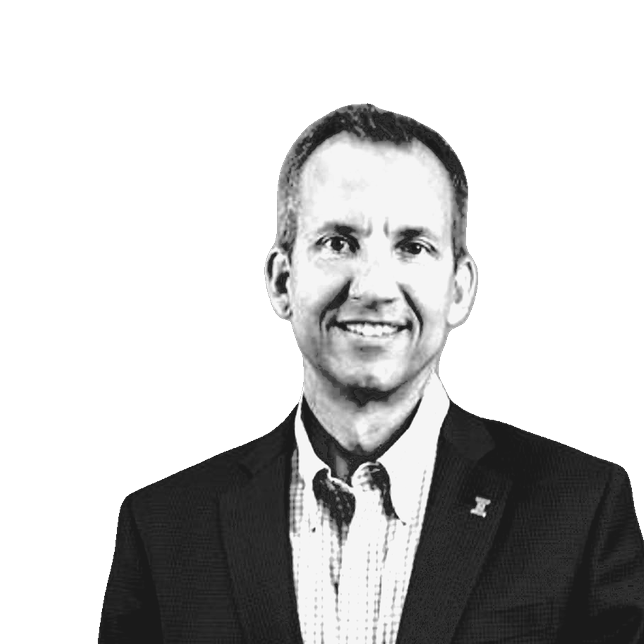
with Harley Johnson
- How a 1994 bet on quantum mechanics in a mechanical engineering lab led to directing the largest dedicated quantum tech park in the world
- Why Illinois chose a "beyond silicon" strategy for the CHIPS and Science Act — and how landing 4 of the first 10 federal quantum centers positioned the state for what came next
- How IQMP's public-private governance model works: a university-governed LLC partnering with private developers, accountable to the public while incentivizing industry
- Why the park deliberately hosts a diverse portfolio of hardware modalities — including PsiQuantum, IBM, Inflection, Dirac, and Pascal — and how that mirrors venture portfolio thinking
- How IQMP's algorithm center connects quantum hardware companies with Fortune 500 end users in finance, insurance, energy, logistics, and pharma
- What the DARPA Quantum Benchmarking Initiative means for tenant selection and validation
- Why roughly two-thirds of future quantum industry jobs may require a bachelor's degree or less — and what that means for workforce development on a former industrial site
- How the Duality Accelerator, Chicago Quantum Exchange, and Polsky Center create a pipeline from early-stage startups to scale-up tenants
- Why the convergence of physics, engineering, and computer science — all housed in one college at UIUC — is accelerating quantum's transition from science to engineering
- Harley Johnson — Professor, University of Illinois Urbana-Champaign, Department of Mechanical Science and Engineering and Materials Science
- Illinois Quantum and Microelectronics Park (IQMP)
- Chicago Quantum Exchange (CQE) — regional hub coordinating quantum research, workforce studies, and industry engagement
- Duality Accelerator — quantum startup accelerator run through the Polsky Center at the University of Chicago
- Polsky Center for Entrepreneurship and Innovation, University of Chicago
- DARPA Quantum Benchmarking Initiative — federal program validating progress toward useful quantum computing
- NSF MRSEC at UIUC — Materials Research Science and Engineering Center focused on electronic and quantum materials
- CHIPS and Science Act — federal legislation driving investment in semiconductor and quantum technology manufacturing in the US
- PsiQuantum — photonic quantum computing company scaling up at IQMP
- IBM — anchor tenant at IQMP with longstanding partnership with UIUC
"Help me pick a problem, a topic that is not big now, but would be big in 10 years." — Harley Johnson, on the question he asked his advisor in 1994 that launched his career in quantum materials
"When I heard my friends who are experimental physicists say, 'We know how to do it, now it's just an engineering problem,' I said great — now you've thrown down the gauntlet. Let the engineers at it."
"Something like two-thirds of the jobs that this industry will eventually create will require a bachelor's degree or less." — On workforce projections from Chicago Quantum Exchange research
"Our neighbors and community members are learning about quantum and thinking about how my grandson gets a job in quantum. Because my family, until now, we're steelworkers." — On the community impact of building a quantum park on a former US Steel site
"We're seeing a convergence of the great productive academic minds from computer science, engineering, and physics working now on the same problems. I'm not sure we saw that even five years ago."
- Alejandra Y. Castillo — Quantum as a Regional Economic Development Engine — Castillo, former Assistant Secretary of Commerce for Economic Development, discusses how quantum technologies fit into federal and state economic strategy through the CHIPS and Science Act, EDA Tech Hubs, and inclusive workforce development. Essential context for understanding the policy and economic framework that IQMP operates within.
- Martin Laforest — Building Quebec's Quantum Ecosystem — Laforest, partner at Quantacet and advisor to Canada's National Quantum Strategy, traces how Quebec built one of the world's strongest quantum ecosystems through decades of strategic investment — starting with a bet on condensed matter physics in the 1970s. A compelling parallel to the Illinois story and a window into how this pattern is playing out globally.
- Nadya Mason — Quantum Leadership — Mason, the dean of the Pritzker School of Molecular Engineering at University of Chicago, is a major force on the academic side of the Illinois quantum ecosystem, and has strong views on what's needed in terms of inclusion and education.
- If you're working on quantum scale-up challenges or building a quantum startup approaching the growth stage, explore what IQMP and the Illinois quantum ecosystem offer — from cryogenic facilities to algorithm partnerships to connections with Fortune 500 end users.
- Subscribe to the NQE Podcast to follow the people and institutions building the infrastructure for quantum computing's next chapter.
- Share this episode with anyone in economic development, science policy, or workforce planning who wants a concrete example of how quantum investment translates into jobs and regional growth.
Sebastian Hassinger Welcome back to the New Quantum Era. I'm your host, Sebastian Hassinger. Today I'm talking with Harley Johnson, professor of mechanical science and engineering and materials science at the University of Illinois Urbana-Champaign and the director and CEO of the Illinois Quantum and Microelectronics Park, or IQMP. I have a bit of a personal connection to this story. When I first joined the IBM Quantum team in 2017, early in 2018, one of my very first tasks was helping to formalize IBM's membership in the Chicago Quantum Exchange, which is the effort that predated and is in many ways the ancestor of IQMP. At the time, it felt like an important but somewhat speculative move. This is before the National Quantum Initiative, or NQI Act. Investing in a regional quantum ecosystem that was still taking shape seemed like an interesting but speculative thing to do. But looking back, it's clear just how farsighted David Awschalom, Kate Timmerman, and the rest of the Illinois quantum community were. They were building the connective tissue between universities, national labs, and industry that made everything we're about to discuss possible. CQE became a model for how to organize a regional quantum ecosystem. And the fact that Illinois is now home to the most ambitious quantum infrastructure project in the world is not an accident. It's the result of a decade of deliberate community building. IQMP is a 128-acre technology park being built on a former US Steel site in Chicago. And it's pretty easy to say it's the most ambitious dedicated quantum infrastructure project in the world right now. The park already counts PsiQuantum, IBM, and several other quantum companies as tenants. And it's backed by a unique public-private model that connects the state's research universities and national labs with the industry partners focused on one thing: scaling up quantum computing from laboratory prototypes to real-world systems. If you've been following this podcast, you'll recognize this as part of a bigger story we've been tracking. I find it really interesting how over 2015 to 2020, there was sort of this very early stage of private investment that culminated in the Google quantum supremacy experiment. The same year the National Quantum Initiative came out, very quickly afterwards Quantum Delta in the Netherlands, and the international growth of national-level quantum strategies is now transitioning to these regional economic development stories. So a few episodes back, Alejandra Castillo joined us to talk about how quantum fits into federal and state-level economic development strategy in the US, the CHIPS and Science Act, EDA Tech Hubs, and building an inclusive workforce pipeline that goes well beyond PhDs. And Martin Laforest gave us a window into how Quebec and Canada built one of the strongest quantum ecosystems in the world through decades of strategic investment, starting with a bet on condensed matter physics at the University of Sherbrooke back in the 1970s. What's happening in Illinois is part of the same global pattern. Regions that invest early and intentionally in the ecosystem around quantum — not just the science, but the infrastructure, the workforce, and the economic development framework — are the ones pulling ahead. Harley's own path to leading this effort is a great story in and of itself. He started as a mechanical engineering grad student in 1994, asked his advisor to help him pick a topic that would be big in 10 years, and landed in quantum. 30 years later, he's at the intersection of the science, the engineering, and the economic development that are all converging to make quantum computing's next chapter happen. We're going to talk about why Illinois has become the global epicenter for quantum investment, how the CHIPS and Science Act shaped the state's strategy, what the Quantum Benchmarking Initiative from DARPA means for the industry, and why the workforce implications of all this really include more than the standard story of physics PhDs. So let's get into it. --- Sebastian Hassinger Hi Harley, thanks for joining me today. Harley Johnson Thanks for having me. It's a pleasure to be here. Sebastian Hassinger So I want to start as I often do just by getting you to talk a little bit about your journey. I think you have a particularly unique one. There's always sort of a unique story just to get to professor, researcher in some part of the field of quantum computing since it is so new. But then on top of that, you have your journey to where you are now as the director and CEO of the Illinois Quantum and Microelectronics Park, which is a really exciting development. Given that intro, can you give us a little bit of sense of your journey? Harley Johnson Sure, yeah, so happy to. So I'm a professor at the University of Illinois, Urbana-Champaign, in the Department of Mechanical Science and Engineering and in Materials Science. And I've been there for 25 years and work in the area of electronic materials and quantum materials. When I started my graduate studies way back, I entered a graduate program in solid mechanics, understanding mechanical behavior of materials. And I was working for a professor who was an expert in thin film materials behavior and sort of thin films for microelectronics. And when I started my program, asked him, we talked about what I would work on, and I asked him, help me pick a problem, a topic that is not big now, but would be big in 10 years. That was in — Sebastian Hassinger Smart. Harley Johnson That was in 1994. And he said, OK, I'll think about that. And we met a series of times over the semester. And he said, how about a problem in quantum? And I didn't know what that was, but we talked about that and what that meant. And he said, there's an emerging area in mechanics where people are trying to understand how defects in materials affect quantum mechanical behavior and strain and deformation, how that affects quantum mechanics. And I thought, well, if you're the expert, so if you tell me that's going to be big in 10 years, then this is what I want to do. So I began working on problems in semiconductor materials at the nanoscale. My topic became quantum dots and quantum wires then in the kind of mid-90s. And I was doing stuff that most of my colleagues didn't really have any idea what that meant, and much less what the applications would be. But we were studying interesting things like how do band structures change due to deformation, and especially anisotropic materials, how do we predict that, how do we model that. And at the time, I was inspired by things that I was seeing in the literature around STM images of nanostructures and the famous quantum corral image from IBM. At that time, it just blew my mind that we're looking at individual atoms and imaging wave functions and things like that. I was just drawn into that at the basic science level and built my career as an academic working on computational modeling. So I'm not an experimental physicist. I don't build quantum computers. I never have. Sebastian Hassinger Right. Yeah. Harley Johnson But I've been interested in using large-scale computer power to make predictions about materials behavior. And so I've used lots of the big leadership-class computing platforms around the country to do simulation of materials and electronic structure and things like this. So that's my academic background. Over the years, I've been at UIUC, as I said, for a long time, got involved in leadership roles and helping my colleagues set up big research centers and big partnerships with federal government and with industry. In that capacity, kind of started working on bigger and bigger things. I bumped into you a few years ago when we were setting up a big partnership with IBM at UIUC. And one of the topics within that IBM partnership at UIUC is quantum. But I was really sort of leading that on behalf of my colleagues. But it took me into sort of thinking about how do we do big things with partners outside of academia. Sebastian Hassinger Right. Well, and in fact, in that UIUC-IBM conversation, I was part of the IBM Quantum team. And if I recall correctly, you were sort of in part representing the MRSEC, the NSF center, the Materials Science center. So even then you were sort of trying to reconcile federal funding, industrial interest in applications of research, and the academic or pure science research kind of perspective. So that seems like a good dress rehearsal for where you are now. Harley Johnson Yeah, right. And we're trying to pull together all of the big levers at our disposal, right? I was part of the NSF-funded MRSEC and then later the director of the MRSEC. And that's a program that is focused on electronic materials, quantum materials, new phases of materials and new topological behavior and things like that. And so we're always trying to challenge one another to think about how to pull together these different kinds of resources and levers to do bigger and bigger things. And partnerships like we built with IBM six, seven years ago are one example of that. About two or three years ago, we started thinking about — well, at that time, the federal government was rolling out new sources of funding in the CHIPS and Science Act. And so a small group of us in the state of Illinois began to think about how do we create a strategy for the state and position the state to be more successful in attracting funding from the CHIPS and Science Act. And that, of course, a lot of that was about reshoring microelectronics manufacturing and reversing the kind of trend in the microelectronics industry in the US. And we looked at the strengths and weaknesses of the state of Illinois and concluded that the state of Illinois was not in quite the same advantaged position that some states would be for pursuing big fab kind of activities for conventional microelectronics. But quickly converged on an approach that kind of doubled down on some of our strengths, and the strengths at that time and today are around quantum in the state of Illinois. That kind of goes back to the original NQIA and some of the first major funding for quantum to come out of the federal government. In that first wave of quantum funding in 2017-2018, there were five big DOE centers and five big NSF centers. And the state of Illinois landed two of the DOE centers and two of the NSF centers. So four of the 10 around the country. It was a huge success for our academic institutions and for our national labs. Sebastian Hassinger Yeah. Harley Johnson You have just a great ecosystem here. And so we were looking back at that thinking, wow, we're really poised to do something big in quantum. And so let us think of our strategy in microelectronics as sort of like, what is the future of computing? Not what is conventional silicon CMOS. And so the tagline was "beyond silicon." What is the world going to look like beyond silicon CMOS? We pulled together all of the threads that we could and connected all the dots. And at that time, the state of Illinois was working on some business attraction opportunities, looking at quantum companies, beginning to think about what is the future of the quantum computing industry and working on attracting a company called PsiQuantum into the state of Illinois because they were starting to think about where they would scale up. Sebastian Hassinger Right. Harley Johnson And so we said the time is right — if we can get a big state investment to both speak to the federal government and to leverage for business attraction and economic development for the state, and if we do this the right way, we can accomplish multiple goals here. And so we set on the idea of a big tech park, technology park for quantum computing scale-up. And that's what we call now the Illinois Quantum and Microelectronics Park. We announced that in summer of 2024. And that quickly set a bunch of things into motion. That quickly pulled me in to the role of leading the activity. And we've been sprinting ever since. But that's kind of the evolution. Sebastian Hassinger That's great. You've mentioned scale-up a couple of times and that is the explicit focus of the IQMP — helping the industry find the ways around the barriers to scaling up. And it also makes perfect sense that that drives the alignment with the statewide desire for driving larger economic growth, right? Once we overcome those scaling challenges, it stands to reason the industry will hit an inflection point and all of a sudden there'll be greater demands for supply chain, for all the skilled labor that goes into the advanced manufacturing. Every component of a quantum computer of any modality requires all kinds of incredibly esoteric skills to build. So that makes great sense. But when you think about scaling up — I mean, in a sense, there's a physical scale. 128 acres is probably the largest dedicated quantum research park in the world, I would guess. But what are the challenges you see where the combination of industry, research, and public sector can really help as an unlocking force? Harley Johnson So if we were building a technology park for any kind of deep tech objective, I think we would have the kind of challenges that you would think about around construction and in this case developing a brownfield site. That's challenging and it's ambitious and it involves bringing together partners from across the public and private sector. And we're doing it in quantum and that has its own challenges. But a lot of that is how do you execute on public funding, public dollars, and do it in a way that the private sector is incentivized to come in and build their own business in partnership with you. And so I think some of that we tried to build around a model where there's an organization which is called IQMP LLC that I lead that is sort of managing the project. We don't own everything. We don't own all the land. We own some of the land, but we're working in partnership with a private developer. And this is — we didn't just make up the model out of thin air. This is a model that is very successful in a lot of university research parks around the country, including one that we have in Champaign, where the university is providing the governance and private developers have a profit motivation to come in and make deals with individual companies and build their buildings and so on. But the other thing is that our organization is a public body. We're owned by the university, we're governed by all the research universities in the state and the national labs. And so we have a governance that is accountable to the public. And we are in a position, therefore, to hopefully be trusted to spend the public dollars. Sebastian Hassinger I see. Harley Johnson The state investment that is seeding this is flowing through this organization and we're accountable to the public and we make decisions transparently about how we're going to execute on that. We work hand in hand with the state and with the city and the county and all those things to make decisions about how to have the biggest impact on the tech goals. Now that's one dimension of it. And there are other dimensions around creating economic opportunity and especially revitalizing this part of the city. It's a formerly heavily industrial part of the city. Sebastian Hassinger Right, it's a US Steel site, which is — there's a nice sort of poetic metaphor there of an old technology being replaced with a new technology in a sense. Harley Johnson Yeah, right. It's in a community that's got a proud industrial legacy. And now our neighbors and community members are learning about quantum and thinking about, how's my grandson going to get a job in quantum? Because my family, until now, we're steelworkers. I mean, there's a really wonderful opportunity here if we do this right to benefit the community. So that's a whole other dimension. Sebastian Hassinger Well, and I think on the workforce, one of the things that people don't appreciate is how, right now in these very early days, most of the demand is for very specialized skills that are sort of PhD level. But as the commercial potential emerges from these devices, it's going to drive significant demand for people with graduate or undergraduate level skills. I mean, there'll still be skilled labor, but it's quite a bit broader base than just an army of PhDs, I would say, right? Harley Johnson Right, yeah, we think so. And we've learned a lot from working with our partners and friends at Chicago Quantum Exchange, who have done a lot of work on scoping out the future of the industry and the kind of needs that the industry will have in terms of skilled workers. They've concluded that something like two-thirds of the jobs that this industry will eventually create will require a bachelor's degree or less. So it's those kinds of things that we point to. We don't know — we don't have a crystal ball — but we're confident that there's going to be a lot of opportunities for a lot of people with different backgrounds. The other thing I would say, as you were asking about challenges, is we're also very much focused on the applications end. So it's not just about building hardware for prototype quantum computers, but what are the applications going to be? And so for that reason, in order to connect to potential end users, we've built an algorithm center to help the industry move from the hardware focus to an applications focus. Sebastian Hassinger Hmm. Harley Johnson I'm a computational scientist. That to me, that makes a lot of sense — thinking about solving big problems on computers, not necessarily about making physical qubits, but we're excited about that too. Sebastian Hassinger Is the idea that the function in part would be to bring other industries in to try to understand how the hard problems in the financial sector or in manufacturing and other logistics, transportation, how quantum computing might help with those types of problems? Harley Johnson Yeah, exactly. And so we've pulled together algorithms experts from the companies that we work with and from universities that we're working with and the national labs to connect them to the computational scientists in some of the big Fortune 500 companies in financial services, insurance, energy, logistics, pharma — a lot of companies. And so Chicago is an interesting place because you have corporate headquarters for companies in all of those sectors. We have a big group of computational scientists from those companies who are now coming to us to work with our algorithms folks and think about what is the future in their enterprise — how might they use a quantum computer? And they want to be sort of first in line to get access to that. Sebastian Hassinger It's also such a tremendously valuable feedback loop with the hardware design, right? I mean, if you have the application and the end user in mind, that can inform your hardware roadmap and the design decisions you make along the way. Harley Johnson Yes, yes. Sebastian Hassinger So that's really good. You mentioned PsiQuantum. I think IBM is also an anchor tenant in the park. Is there a goal for what kind of total number of tenants you're looking for, or distribution of large companies — IT giants like IBM — or pure plays like PsiQuantum? How do you think about that side of things? Harley Johnson Well, we have always thought that we would want a diverse mix of companies, the giants and some of the startups and a mix of modalities across hardware platforms. So with PsiQuantum and IBM and Infleqtion and Diraq and Pascal, we have that. We have a strong mix of hardware modalities. We're looking for partners who need the kind of amenities and scale-up resources that we're putting in place. For some companies, that's cryogenics — so we've got lots of investment in cryogenic facilities. And then for other companies, they're looking for maybe more on the applications side. And so that's one of the reasons why the algorithm center is important to us. There are different reasons that different partners are showing up. We have a very big partnership with DARPA and the Quantum Benchmarking Initiative. So that's kind of a natural process of selecting or matchmaking — matchmaking the companies that are looking for certain things that we have to offer and the fact that we're looking for strong, validated companies that are making progress towards DARPA's benchmarking goals. So that's one of the ways that we're connecting with companies. Not all of our partners are even participating in that program, but many of them are. Sebastian Hassinger That's really interesting. It also brings me back to the NSF and DOE sources of funding that primarily flow into national labs and the academic institutions. But I suppose in a way that almost creates the top of the funnel for the IQMP, because those turn into technologies that then can be fostered through Duality Accelerator, for example, and then end up being tenants on the park. Is there kind of — are you in the position where you're trusting all those individual parts to work on that process together, or is there some kind of oversight or management at the 30,000-foot level that you are trying to exert? Harley Johnson Yeah, so there's coordination, I think, at several levels. At the level of operating the park, my team — which has a number of subject matter experts, deep technical expertise folks on the team — we're in constant conversations with companies. We're helping them evaluate their roadmap and whether the roadmap aligns to the kind of things that we're doing. That's part of it. But I think you raised an interesting point about the coordination across our ecosystem with projects like the Duality Accelerator. And so we're constantly coordinating with Duality Accelerator that's run by the Polsky Center at the University of Chicago, working closely with CQE. And that is creating connections between some of the early-stage startups and what we're doing. We do see a program like Polsky and the managing director, Samir Mayekar, over there really providing a lot of value to companies at a certain stage of their development. And it's certainly possible that some of those companies will sort of graduate and get to the point where they want to scale up. And so we are coordinating and trying to offer a single experience for a company like that that enters our ecosystem. So there's coordination at multiple levels. We also have regular touch points with the leadership at the national labs who are actually members of my board, the leadership at University of Chicago also on my board. And so it's just an awesome group of leaders and thinkers that you're familiar with from this ecosystem. They're all part of the project. And I think one of the things that maybe differentiates what we're doing a little bit from some of the great work that's being done in other ecosystems around the world, where funding is national funding for science, which is great — so much of our support is for economic development and business attraction. And it's coming from the state. And so what is driving a lot of this is very simple numbers. If a company comes and joins us, how many jobs, how many people will they hire? A company has to look at their own scale-up plans. Can they hire 50 people? Will they put them locally and take advantage of the universities here that are producing the talent, and will they commit to growing their operations? Sebastian Hassinger Right. Harley Johnson So I don't have to know all the details of what's on their technical roadmap. If a company is convinced that they're ready to build an applications team and add 10 new positions, great. We can support that because they're going to come in and they're going to receive certain benefits for joining the ecosystem in the state of Illinois and the city of Chicago. Sebastian Hassinger Yeah, it's funny how there's sort of a parallel to the way a venture fund, for example, manages a portfolio. There's a sense of, you can count on some things will succeed, some things won't, but there'll be value created in indirect ways. Those jobs will provide training, they'll provide potentially inspiration. Even if that company turns out not to work individually, you've got a larger and larger skills base and a more interconnected workforce who are going to be even more efficient at seeing the next opportunity and getting to that scale-up stage. So I definitely see — I think it's in large part what you just said is why Illinois is attracting the most attention globally for the national and regional quantum initiatives. It's seeing how you've evolved to that next stage where you're connecting it to direct economic development. That's attracting a lot of attention, definitely. Well, that's so many moving parts in such an incredibly complex operating environment. You're still a professor with an active research group at UIUC. Do you still keep your hand in the science part of this, or are you just an administrator doing incredibly complicated things with your day? Harley Johnson Yeah, no, I still have an active research group. We're working on some stuff I'm really excited about in 2D materials and defects in topological materials. We have such a great science ecosystem that I'm fortunate to be part of. And I've got great collaborations at the University of Illinois and across the country working on some of these things. So yeah, I'm excited about that. I have days where it would be nice to spend more time on that. But also, we're seeing more and more deep connectivity between what we're doing in this project and the academic institutions. And so our students and postdocs are now getting swept up in new opportunities and new connections that we're making with companies. And of course, so much of the exciting developments in this community are coming out of the industry research activities. And so I think maybe more than ever — at least more than I've ever seen in my career — students who are plugging in and developing collaborations with companies are the ones who are at the leading edge. So I think there's a lot of synergy there between the basic science that we do in the university labs and the work that's being done in industry. So yes, I'm excited about some of the work that we're doing in the lab and I'm still working as a part of the MRSEC and still working with support from DOE and support from the other agencies to fund my lab. And that's going well. I wish we had more than 24 hours in a day. Sebastian Hassinger Yeah. I find it so fascinating too that UIUC is known as an engineering school. There's something like three dozen schools of engineering at UIUC. It's kind of astounding. And you started as a mechanical scientist in engineering. That bet on quantum is very much coming full circle, it seems, because not only is the science of quantum materials turning into an engineering challenge at this point, but also it's at the very center of the mission of scaling up. I mean, it's almost materials challenges first and foremost to solve those scale-up problems, right? It feels like a very intersectional set of challenges from your particular path, both administrative and scientific. Harley Johnson Yeah, absolutely. A couple things. One is, when I heard my friends who are experimental physicists a couple years ago say, "We know how to do it and now it's just an engineering problem," I said great — now you've thrown down the gauntlet. Let's do this, right? As engineers, let the engineers at it. But the other thing I've seen in really just the last couple of years is a convergence of the great productive academic minds from computer science, engineering, and physics, right? Working now on the same problems. And I'm not sure that we really saw that nearly so much even five years ago. We're fortunate at UIUC — we're a big place. But those three disciplines are all in the same college. So physics, engineering, and computer science are all housed in the same unit. And I think that traces back to the stuff that UIUC has always done well since the invention of the visible LED there by one of our faculty members and the transistor by a scientist who later became a professor at U of I, the web browser — all these things were innovations from U of I, and it was engineering combined with physics combined with computer science. Sebastian Hassinger Yeah. Well, that certainly describes the moment we're in right now very much. So this has been terrific, Harley. I really appreciate your time. I think that what you all are doing in Illinois is really world leading. And as I said, it's attracting a lot of attention. I think it's going to inspire a lot of similar efforts around the world, which is really what we need. Harley Johnson Yeah. Well, thank you. This has been great. It's been fun talking to you about it and we're proud of what we're doing and excited about what the future holds. Sebastian Hassinger Excellent. All right.
creators and guest
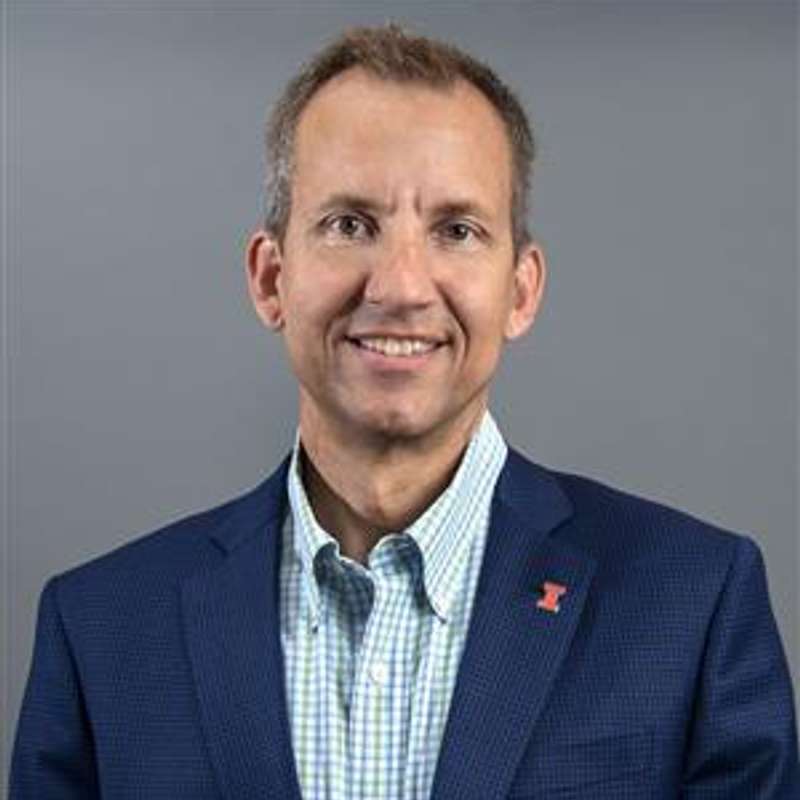
Harley Johnson
GUESTstay curious